Posted on 9/29/2026

The engine stumbles halfway up a hill, then runs normally for the rest of the trip. At the next stoplight, you study the dashboard, expecting a check engine light. Nothing stays on. A few days later, the same hesitation happens again. That makes it difficult to know whether to book a repair or wait for something more definite. The light and the sensation don't always arrive together. A short-lived misfire still deserves attention, particularly when it happens under the same driving conditions each time. 1. A Weak Spark Only Breaks Down Under Load A worn spark plug or weakened ignition coil can fire at idle yet struggle when you accelerate. Higher cylinder pressure makes the spark harder to produce. The engine might stumble during a hill climb, recover when you ease off the pedal, and never run badly long enough to leave a constant warning. A technician can watch cylinder misfire counts during a controlled road test, then examine the suspect plug, coil boot, and ... read more
Posted on 8/28/2026

A ticking sound that only shows up when you accelerate can be frustrating because it may disappear as soon as you lift off the pedal. The engine might idle quietly in the driveway, yet the noise returns every time you merge onto the freeway, climb a hill, or ask for more power. That change with engine load gives us useful information. Some noises get louder because internal engine parts move faster, while others appear because exhaust pressure rises or combustion conditions change under acceleration. The location, speed, and tone of the ticking help narrow down what to check. An Exhaust Manifold Leak Can Tick Under Load A small exhaust leak near the cylinder head can sound remarkably similar to an internal engine tick. Exhaust pressure increases when you accelerate, so a crack in the manifold or a leaking gasket may become much louder under load than it is at idle. We look for black soot around the manifold, damaged gaskets, loose fasteners, and cracks in the exhau ... read more
Posted on 7/31/2026
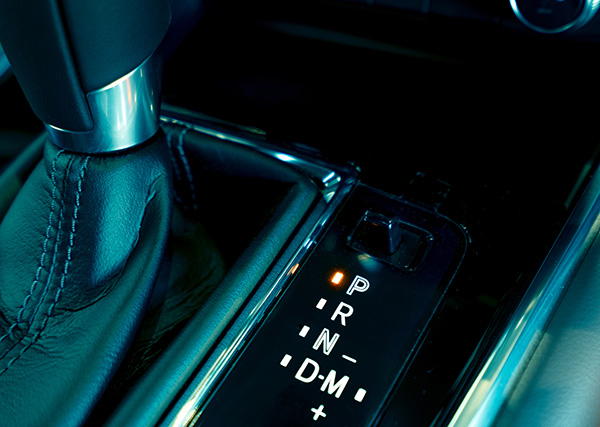
A clunk when shifting from park to drive, drive to reverse, or between gears can make it feel as though something underneath the car is moving too far. Sometimes the sound comes from a worn mount or loose suspension part. In other cases, it points to excessive play inside the drivetrain or a transmission that engages too harshly. The timing and location of the noise provide useful clues. A single clunk when changing direction usually has a different cause than repeated knocking during acceleration. Paying attention to vibration, vehicle movement, and whether the sound is stronger when the engine is cold can help narrow down the source. Worn Engine Or Transmission Mounts Engine and transmission mounts secure the drivetrain while allowing a controlled amount of movement. Most mounts use rubber, and some contain fluid to absorb vibration. Heat, oil leaks, and years of engine movement can cause the rubber to crack, collapse, or separate from its metal housing. When a m ... read more
Posted on 6/26/2026

There was a time when replacing a windshield was pretty straightforward. The old glass came out, the new glass went in, the adhesive cured, and the car went back on the road. That is still the basic shape of the job, but for a lot of modern vehicles, that is no longer the whole job. At our shop, we talk with more and more drivers who are surprised to learn that a windshield replacement may also involve ADAS calibration. If that phrase sounds overly technical, the reason it matters is actually pretty simple. Many newer vehicles have cameras and sensors mounted near or against the windshield, and those systems help power safety features like lane departure warning, forward collision alert, automatic emergency braking, traffic sign recognition, and lane-keeping assist. When the windshield is replaced, those systems may need to be recalibrated so they continue to interpret the road correctly. That is why a modern windshield replacement is not always just a glass job anymore. In a lot of ... read more
Posted on 5/29/2026
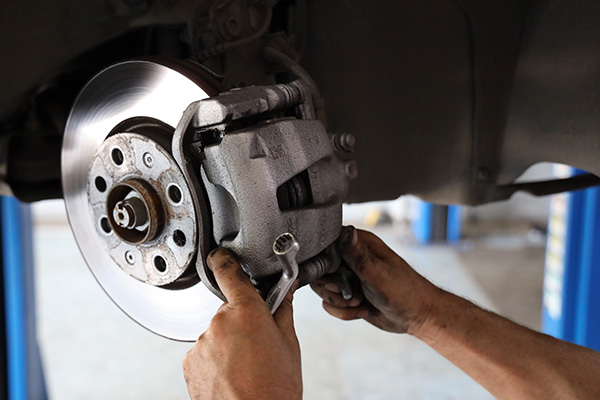
Brake pads are designed to lose material. That sounds odd at first, but it is exactly how the system works. Every stop creates friction, heat, and pressure, and the pads are the parts meant to take most of that wear. Rotors wear too, just more slowly in most cases. If the pads and rotors wore out at the same rate, brake repairs would be more expensive each time. The pad is the replaceable friction surface. The rotor is the metal disc that the pad presses against. Both parts work together, but they do not age the same way. Brake Pads Are Softer Than Rotors Brake pads are made from friction material. Depending on the vehicle, that material may be ceramic, semi-metallic, or organic. Each type is built to grip the rotor, handle heat, reduce noise, and provide controlled stopping power. Rotors are made from harder metal, usually cast iron or a similar alloy. Since the rotor is harder than the pad, the pad wears down faster during normal braking. That is intentional. Th ... read more
Posted on 4/28/2026

Memorial Day weekend is the perfect time to hit the road and enjoy a getaway with family and friends. However, before you embark on your adventure, it's crucial to prioritize safety to ensure a smooth and enjoyable journey. Whether you're heading to the beach, mountains, or visiting loved ones, here are some key road trip safety tips to keep in mind. Tip #1: Vehicle Maintenance Checks Before hitting the road, schedule a comprehensive vehicle maintenance check. Ensure that your tires are properly inflated, brakes are in good condition, fluids are topped up, and lights are working correctly. Address any issues promptly to prevent breakdowns on the road. Tip #2: Check Your Emergency Kit Every vehicle should be equipped with an emergency kit, especially when embarking on a road trip. Make sure your kit includes essential items such as a first aid kit, flashlight, jumper cables, blankets, water, non-perishable snacks, and a multipurpose tool. Additionally, consider adding items ... read more
Posted on 3/27/2026
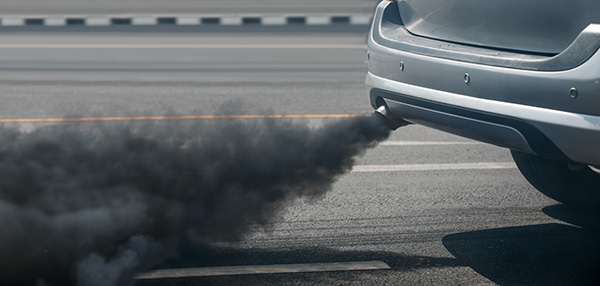
Black smoke from the exhaust indicates the engine is burning too much fuel and not getting enough air. Some drivers notice it during hard acceleration. Others see it at startup, under load, or when the vehicle is working harder than normal. However it shows up, it is not something to brush off as a harmless quirk. That smoke is the engine telling you combustion is out of balance. Why Black Smoke Stands Out So Much A healthy engine should burn fuel cleanly enough that you do not see thick dark smoke coming out of the tailpipe. When black smoke appears, the fuel mixture has gone too rich. In plain terms, the engine is getting more fuel than it can burn properly, so some of it leaves the exhaust as soot. That is why black smoke is different from white or blue smoke. White smoke usually points you toward coolant or moisture, while blue smoke points more toward oil burning. Black smoke is a fuel-delivery and air-supply problem until proven otherwise. Too Much F ... read more
Posted on 2/27/2026
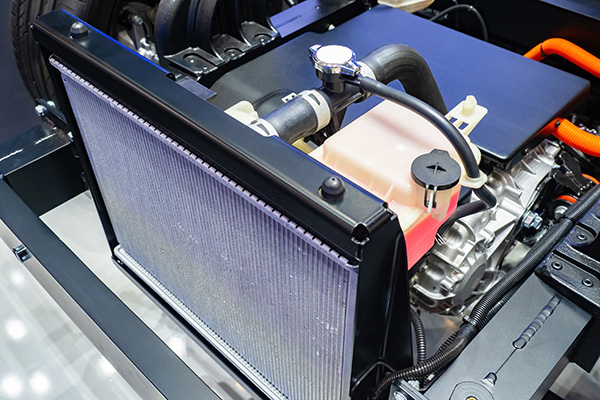
Coolant leaks can be annoying because they do not always leave a puddle. You top off the reservoir, everything looks fine for a week, and then the level is low again. A cooling system pressure test is one of the quickest ways to catch leaks that only show up under pressure, and it often finds problems before the engine ever overheats. It is a straightforward test, but it is effective because it recreates the conditions your cooling system sees when the engine is hot. Instead of guessing, it lets you see exactly where coolant is escaping. What A Cooling System Pressure Test Does A pressure test uses a hand pump and an adapter that fits the radiator neck or reservoir, depending on the vehicle. The system is pumped to a specific pressure, usually close to the rating of the radiator cap. Once it is pressurized, the technician watches to see whether the pressure holds steady or drops. If pressure drops, coolant is leaving the system somewhere. That might be a visible dr ... read more
Posted on 1/30/2026
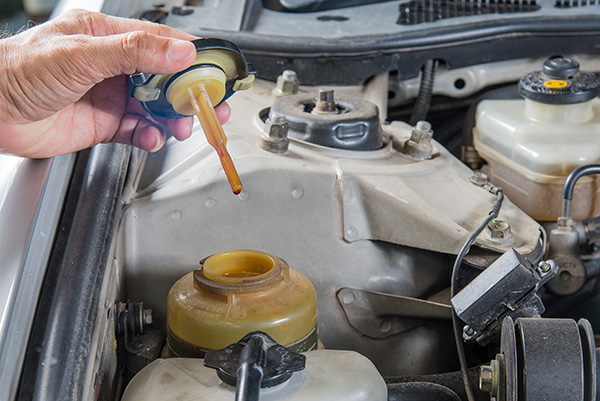
A power steering leak is easy to ignore at first. Maybe there’s just a small spot on the driveway, and the steering still feels mostly normal. A lot of drivers tell themselves they’ll deal with it later, especially if the car still gets them to work and back. The risk is that power steering systems don’t like running low. The leak may start slowly, then speed up without warning. Once the fluid drops enough, you can lose steering assist, overheat the pump, or create a mess that spreads fluid onto belts and suspension components. So yes, you can sometimes drive with a small leak for a short time, but it’s not a situation to treat casually. Why A Power Steering Leak Gets Worse Over Time Power steering fluid is under pressure, and the system runs hot. Rubber hoses soften with age. Seals harden. Connections loosen slightly. Those conditions push a ... read more