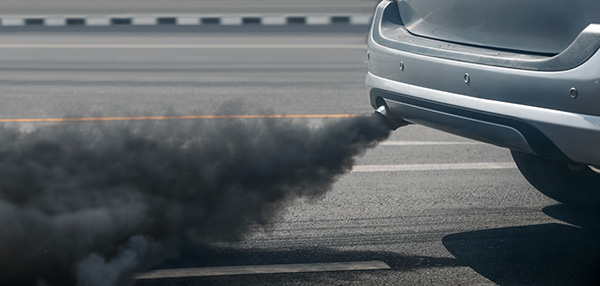
Black smoke from the exhaust indicates the engine is burning too much fuel and not getting enough air. Some drivers notice it during hard acceleration. Others see it at startup, under load, or when the vehicle is working harder than normal. However it shows up, it is not something to brush off as a harmless quirk.
That smoke is the engine telling you combustion is out of balance.
Why Black Smoke Stands Out So Much
A healthy engine should burn fuel cleanly enough that you do not see thick dark smoke coming out of the tailpipe. When black smoke appears, the fuel mixture has gone too rich. In plain terms, the engine is getting more fuel than it can burn properly, so some of it leaves the exhaust as soot.
That is why black smoke is different from white or blue smoke. White smoke usually points you toward coolant or moisture, while blue smoke points more toward oil burning. Black smoke is a fuel-delivery and air-supply problem until proven otherwise.
Too Much Fuel Is Usually The Main Problem
Most black smoke complaints come back to one basic issue: the engine is overfueling. That can happen because the system is commanding too much fuel, or because the engine is not getting the air it needs to burn that fuel cleanly. Either way, the result is the same. The exhaust gets darker, fuel economy drops, and the engine stops running as efficiently as it should.
This is why drivers often notice other changes at the same time. The vehicle may feel sluggish, the throttle response may feel dull, and the gas mileage may fall off more quickly than expected. In some cases, the check engine light comes on. In others, the smoke shows up first.
Airflow Restrictions Can Make the Mixture Too Rich
An engine needs the right amount of air just as much as it needs the right amount of fuel. If airflow is restricted, the fuel that would normally burn cleanly starts leaving soot behind instead. A dirty air filter is one of the simpler reasons this can happen, especially if it has been neglected for too long.
Turbocharged vehicles add another layer to this. If the boost is not building up properly due to a leak, a weak turbo, or an airflow control problem, the engine may still be getting fuel for a load it cannot fully support. That is when black smoke becomes much easier to see, especially under acceleration.
Injectors And Sensors Can Throw Everything Off
Fuel injectors are supposed to meter fuel very precisely. If one sticks, drips, or sprays poorly, the mixture can go rich in a hurry. That usually shows up as rough running, a fuel smell, or black smoke that gets worse when the engine is under load. On diesel vehicles, injector issues are an especially common reason for dark exhaust.
Sensor problems can create the same basic result. If the mass airflow sensor is dirty, the engine coolant temperature sensor is reading incorrectly, or another input is off, the computer may deliver the wrong amount of fuel. The engine follows bad information, and the smoke is the visible result.
When Black Smoke Points To Something More Serious
Sometimes, black smoke is not just a minor tune-up issue. If it is heavy, constant, or getting worse quickly, there may be a larger problem with the fuel system, turbo system, intake tract, or engine controls. A vehicle that leaves a dark cloud every time you accelerate is usually well past the point of waiting to see if it improves on its own.
This is where a proper inspection becomes important. The exact timing of when the smoke appears helps narrow the cause. Smoke only under acceleration points in one direction. Smoke at idle points in another. A system check should look at fuel delivery, airflow, sensor data, and any signs that the engine has been running rich long enough to affect other parts.
Why You Should Not Keep Driving It That Way
Black smoke is not just a cosmetic issue. An engine running rich can foul spark plugs, damage oxygen sensors, overload the catalytic converter, and leave heavy carbon deposits behind. On a diesel, it can point to fuel-delivery or air-control problems that get expensive if they keep developing under load.
That is why regular maintenance helps so much here. Small airflow or fuel-control problems are often caught before they become obvious smoke complaints. Once the exhaust is visibly black, the engine is already telling you the imbalance has grown past the early stage.
What To Pay Attention To Before Service
If you are trying to describe the problem, pay attention to when the smoke shows up and what the vehicle is doing at the time. Does it happen only during hard acceleration? Only at startup? Only when towing or climbing a hill? Those details make the diagnostic much more focused.
It helps to notice whether fuel economy has dropped, whether the engine feels down on power, or whether any warning light has appeared. Black smoke rarely travels alone for long. The engine usually gives at least one or two more clues if you are paying attention.
Get Exhaust And Engine Performance Service In Westchester, CA, With Loyola Marina Auto Care
If your vehicle is blowing black smoke, Loyola Marina Auto Care in Westchester, CA, can inspect the fuel and air systems, identify the cause, and help prevent that rich-running condition from turning into a much bigger repair.
Bring it in before the smoke leads to more damage than the original problem.