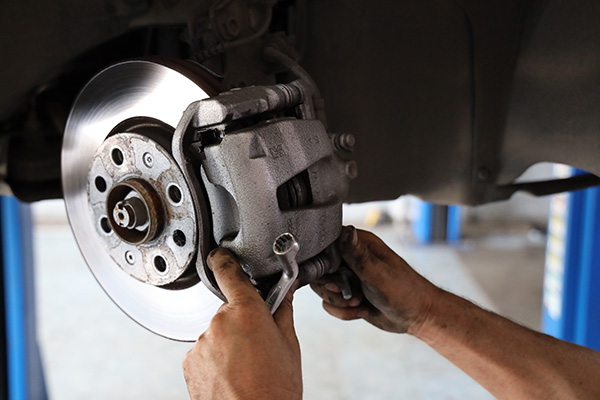
Brake pads are designed to lose material. That sounds odd at first, but it is exactly how the system works. Every stop creates friction, heat, and pressure, and the pads are the parts meant to take most of that wear.
Rotors wear too, just more slowly in most cases.
If the pads and rotors wore out at the same rate, brake repairs would be more expensive each time. The pad is the replaceable friction surface. The rotor is the metal disc that the pad presses against. Both parts work together, but they do not age the same way.
Brake Pads Are Softer Than Rotors
Brake pads are made from friction material. Depending on the vehicle, that material may be ceramic, semi-metallic, or organic. Each type is built to grip the rotor, handle heat, reduce noise, and provide controlled stopping power.
Rotors are made from harder metal, usually cast iron or a similar alloy. Since the rotor is harder than the pad, the pad wears down faster during normal braking. That is intentional. The pad wears down, so the rotor does not have to absorb all of the friction damage.
This does not mean rotors last forever. Heat, rust, grooves, thickness changes, and warping can still make rotors unusable before or during a brake pad replacement.
Every Stop Creates Friction
When you press the brake pedal, the caliper squeezes the brake pads against the rotor. The friction between those parts slows the wheel. The more often you stop, the more material comes off the pads.
City driving can wear out pads quickly because the brakes are used repeatedly. Short trips, traffic, school drop-offs, parking lots, and stop signs all add up. Highway driving is usually easier on pads because the brakes are not used as often.
Driving style plays a role, too. Hard stops, late braking, riding the brakes downhill, and carrying extra weight can all shorten pad life.
Heat Speeds Up Pad Wear
Brakes turn motion into heat. That heat has to go somewhere. Pads, rotors, calipers, and brake fluid all deal with it every time the vehicle slows down.
Brake pads are designed to withstand heat, but excessive heat can wear them faster. If a driver brakes hard frequently, drives in heavy traffic, or carries heavy loads, the pads can wear down more quickly. Heat can also glaze the pad surface, creating noise or a harder pedal feel.
Rotors absorb heat as well. If the heat is extreme or uneven, rotors can develop hot spots, vibration, grooves, or thickness variation. That is when rotors may need to be replaced, even if they still look thick on the outside.
Calipers Can Make Pads Wear Unevenly
Brake pads should wear fairly evenly from side to side and from the inner pad to the outer pad. If one pad wears much faster than the others, something else may be happening.
A sticking caliper, a dry slide pin, a collapsed brake hose, or a hardware problem can keep a pad pressed against the rotor longer than it should. That creates extra heat and faster wear. One wheel may also have more brake dust, a hot smell, or a slight pull while braking.
During an inspection, the pad wear pattern tells us more than the remaining thickness. Uneven wear can reveal a brake problem that would return quickly if only the pads were replaced.
Rotors Wear Differently
Rotors do not usually lose material as fast as pads, but they can still become damaged. A rotor may develop deep grooves, rust pitting, heat spots, cracks, or uneven thickness. Once that happens, new pads may not seat correctly against the surface.
That can lead to squealing, vibration, pulsing, or poor brake feel. In some cases, the rotor may be too thin to reuse safely. Rotor thickness has to be measured, not judged by sight alone.
This is why brake service is not always pads only. If the rotor surface is rough or out of specification, replacing pads without addressing the rotor can lead to noise and recurring brake complaints.
Brake Pad Material Changes Wear Rate
Different brake pad materials wear at different speeds. Softer pads may be quieter and gentler in daily driving, but they may wear faster. Some semi-metallic pads can handle heat well, but they may be noisier or harder on rotors depending on the vehicle and driving conditions.
The correct pad depends on the vehicle, the driver, and how the car is used. A commuter car, a family SUV, a work vehicle, and a performance car do not all need the same pad behavior.
Cheap pads can also create problems. They may wear quickly, make noise, create dust, or fail to handle heat properly. Good brake parts help the full system work more predictably.
Regular Maintenance Helps You Plan Brake Service
Brake pads are easier to manage when they are checked before they reach the metal backing. Once the pad material is gone, the metal can contact the rotor and quickly damage it. That is when a routine pad replacement turns into a more extensive repair.
Regular maintenance should include brake pad measurements, rotor checks, caliper movement, hose condition, hardware condition, and brake fluid condition. A quick look through the wheel is not always enough.
If your brakes squeal, grind, vibrate, pull, smell hot, or feel different at the pedal, the system should be checked soon. Pads are meant to wear, but they should wear in a controlled and even way.
Get Brake Service In Westchester, CA, With Loyola Marina Auto Care
If your brake pads are wearing quickly, your rotors are damaged, or your brakes are making noise, Loyola Marina Auto Care in Westchester, CA, can check the pads, rotors, calipers, hardware, and brake fluid.
Schedule a visit and get the brake system inspected before normal pad wear turns into rotor damage or uneven stopping.